Phishing Attacks – What Are They and How to Prevent Them
Table of Contents
Today, one of the largest cyber threats to businesses of all sizes and sectors is phishing attacks. Small and medium-sized enterprises (SMEs) are especially prone to this cyber threat because they lack the funding and cybersecurity expertise - making them prime targets for fraudsters.
Phishing attacks manipulate the employees' psychology to get confidential business information. As a result, the organization's development and growth are harmed and frequently result in multiple types of damage:
- Financial losses: According to the FBI's Internet Crime Complaint Center (IC3), in 2020, phishing attacks resulted in $1.7 billion in losses for businesses. According to AAG, the average cost of a data breach against an organization is more than $4 million. One whaling attack can cost a business over $45 million.
- Operational damage: Along with financial losses, phishing attacks can have a significant operational impact on businesses. The first effect is when the strategy disrupts operations and services, putting the company's systems at risk of being inoperable. This leads to decreased productivity and postponed service and product delivery.
- Reputational damage: A phishing attack has the potential to seriously harm a company's reputation, leading to a decline in customer confidence, bad publicity, and long-term harm to the brand. This loss of trust can result in customers switching to the competition who demonstrate better security practices. That's why many businesses end up protecting their assets after a breach.
What is a Phishing Attack?

To conduct a phishing attempt - attackers send messages, typically by email or another messaging system, pretending to be a trustworthy person or organization. Criminals often target business emails (not just personal ones), and employees might be susceptible to phishing, thinking they are following IT instructions or advice from a "trustful" vendor.
Phishing emails are often mistaken for authentic ones. The majority of phishing attempts include the attackers obtaining private information from the victim, including account information and login passwords. It is frequently simpler to take advantage of human vulnerabilities than it is to breach digital protections.
Developing a successful plan to stop, identify, and lessen phishing requires an understanding of how phishing operates and the many tactics used in phishing assaults.
Types of Phishing Attacks
There are multiple types of phishing attacks, and here we explain most of them.
Email Phishing
The most common phishing tool is email. Scammers create fake domains that mimic legitimate businesses and bombard the targets with hundreds of messages.
- Character replacements, such as placing "n" and "r" to create "m" instead of "rn", are common in fake domain names.
- Additionally, they may use a legitimate name within the local area of each email address, such as sender@company.com, with the identity of the sender showing in the inbox.
- A message that asks the users to click on a link or download an attachment.
There are several methods for identifying phishing emails, however, the users must verify the sender's email addresses every time.
Spear Phishing
The technique known as spear phishing is similar to other phishing attempts as it deceives victims by sending messages from a reliable source.
- Instead of sending generic mail to a large number of users (in the hope that one will fall for the trap), spear phishing attacks target one individual or are focused on a single group.
- Typical targets of spear phishing are employees or IT teams while whaling targets upper management like senior executives.
- HR personnel and IT managers are popular targets because they have greater access levels inside the company.
- To persuade a target to provide private and valuable information, attackers frequently pose as other senior executives or representatives of other businesses.
- After they gain trust, the attackers can exploit the target's authorization to spear phish employees and other valuable targets.
Pharming
Pharming is a more sophisticated type of phishing, so it is more difficult to identify. The DNS (Domain Name Server), which translates URLs from text form to IP address, is taken over by a hacker. When the URL of the target website is entered - the compromised DNS reroutes users to another IP address - typically that of a malicious website that seems authentic.
Clone Phishing
Attacks known as Clone phishing can be quite successful even though they lack the sophistication of whaling or spear phishing. The distinction is that the attacker duplicates authentic emails that have already been issued by reliable organizations, rather than posing as an organization or person to make a fake request.
The attacker goes on to modify the link, taking the victims to a false site designed to mimic a genuine one from the initial email. When users input their credentials, the attacker can get them.
Pop-up Phishing
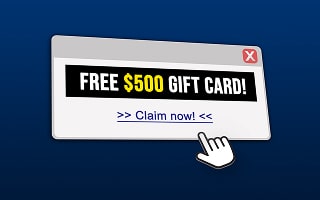
Pop-up phishing is still harmful even though the majority of company's PCs install blockers for pop-ups. Malicious attackers are able to add harmful code within pop-ups (little notifications that users note whenever they journey to a site).
Using the victim's web browser's "notification" feature is one type of new technique for pop-up phishing used today. The browser displays a notification requesting access to show notifications when the user loads a specific site. When you click "Allow", a pop-up will install malware.
HTTPS Phishing
Nowadays, the majority of businesses employ HTTPS rather than regular HTTP to verify the authenticity of links. Most users believe that clicking on URLs that are encrypted using Hypertext Transfer Protocol Secure (HTTPS) is safe. Attackers can utilize HTTPS to make their links appear legitimate and increase the success of their phishing campaigns.
SMS / Voice Phishing
SMS phishing and vishing (voice phishing) utilize mobile devices as targets. When an attacker uses smishing, they send text messages that include false information (as with a phishing email). Vishing entails the con artist speaking to the victim directly over the phone.
The scammer posing as a fraud investigator for a bank or credit card firm is the most likely type of vishing scam. After notifying the victims of an account breach, the scammer asks them to provide credit card data to confirm their identity. As an alternative, the attacker may request that the victim move money to a designated account.
How To Prevent Phishing Attacks?
Now we'll explore the various strategies for preventing phishing attacks, and emphasize the importance of proactive measures.
Carefully Analyze the Email Text
Human fallibility is misused by social engineering techniques, particularly when employees feel pressured and respond hastily. Many people follow orders from people in positions of authority without evaluating the message's content.
These are phishing strategies your employees should be aware of:
- Fake order: The phishing email poses as a courier to send the victim to the attacker's website, where they must enter their credentials and log in.
- A fake invoice is a communication that looks like a legitimate vendor asking for payment, and rerouting the funds to the cybercriminal's account.
- Immediate response: When an email requests that recipients act right away, they should take their time to confirm the message's legitimacy before responding.
Train Employees
Promoting safe procedures among staff members is an essential component of phishing prevention. All stakeholders and staff members in your organization should receive training on how to stay compliant and recognize phishing attacks. This knowledge of security serves as a human barrier.
Every employee should be required to follow specific procedures to assess if a message is suspicious or authentic. Continuous awareness training should incorporate interesting resources like instructional movies and visual guides.
Conduct Phishing Testing
A procedure called phishing testing enables businesses to send employees phony but realistic phishing emails to gauge their reaction.
- Phishing probes could assist your staff members in identifying and responding to phishing emails, and their effect is evaluated through phishing testing.
- A constructive objective, like a challenge to recognize phishing emails, should be the focus of your simulated phishing campaign.
- You should ensure the workouts are relevant and helpful to inspiring staff.
- Employees who successfully spot fraudulent conduct can receive rewards from their employers, which serves as a motivation.
Email – Endpoint Security
To automatically identify and stop phishing emails, use sophisticated email filtering software. For extra security, especially in light of the growing popularity of hybrid work, combine automated moving target defense (AMTD) with advanced endpoint detection and response (EDR). By continuously changing the attack surface, this layered defense increases resistance to changing threats and makes it harder for attackers to take advantage of weaknesses.
Managed Detection and Response
To quickly detect and eliminate phishing attempts and other online dangers, make use of real-time incident response, proactive threat hunting, threat intelligence, and round-the-clock monitoring.
Access Management Policies
Implement multi-factor authentication (MFA) to improve the access security. To safeguard critical systems and data, think about implementing a company-wide zero-trust framework that enforces stringent access rules, prohibiting all access by default and requiring ongoing verification.
Phishing Attacks Real Cases
Here we explore the most famous and damaging phishing attacks from recent history.
Sony Pictures Leak.
Sony was a target of a significant amount of data leaks in 2014. A breach involving more than 100 Terabytes of confidential business data cost well over $100 million. When the top-level employees opened the infected attachments in the phishing emails, the phishers posed as their coworkers.
In particular, the exploit took advantage of a phony Apple ID verification email. The phishers discovered passwords that matched those for the Sony network by combining LinkedIn information with Apple ID logins. This is a perfect example of why it's crucial to have distinct passwords for various online accounts
Facebook / Google Scam.
A prolonged phishing attack defrauded Facebook and Google of $100 million between 2013 and 2015. Because both businesses utilized Quanta, a Taiwan-based corporation, as a vendor, the phisher exploited this knowledge. After the hoax was eventually uncovered, Facebook and Google filed lawsuits in the US. Following the arrest and extradition of the assailant from Lithuania, Facebook, and Google were able to recoup half of the $100 million that had been taken from them.
Ubiquity Networks.
The US-based computer networking business Ubiquiti Networks suffered a phishing attack in 2015 that cost them $47 million, of which they anticipated recovering at least $15 million. To complete a covert acquisition, the attacker gave the Chief Accounting Officer of the company instructions to make several transactions while posing as the CEO and attorney. The business sent 14 wire transactions to accounts in China, Poland, Hungary, and Russia in 17 days.
Upsher-Smith Labs.
A BEC attack (business email compromise) against a pharmaceutical business in Minnesota in 2014 cost them more than $39 million. The phisher sent emails to the accounts payable coordinator of Upsher-Smith Laboratories, posing as the company's CEO, instructing them to conduct specific wire transfers and to follow the directions of a "lawyer" who was collaborating with the attackers. The company was able to recall one of the nine wire transfers sent because the attack was detected halfway through.
Elara Carling Phishing attack.
The employees of Elara Caring, a U.S. healthcare service, were the targets of a phishing attempt in 2020. Attackers were able to access employee email accounts and compromise the personal data of over 100,000 senior patients, including names, dates of birth, financial and banking details, Social Security numbers, driver's license numbers, and insurance details, using just these compromised targets.
Bottom Line
Phishing attempts can cause significant financial and operational losses to businesses as well as damage brand reputation. Cybersecurity is not just a way to protect your assets and data, but it is also a worldwide necessity for conducting business. An endpoint security solution cannot always help because an antivirus can't catch most phishing attacks.
To defend against these attacks - your business should affiliate with specialists to strengthen your cybersecurity posture, from threat detection and incident response to security policy development and compliance. And the best way to avoid damage is to train people for cybersecurity.