Data Security Best Practices to Protect Your Company

Table of Contents
Data has become a vital ingredient in modern life and business. Data is everywhere and growing -- researchers estimate that over 400 million terabytes of data (400 followed by 12 zeros) is produced daily. Data is also a valuable commodity for cybercriminals who steal it, sell it, and use it to commit cybercrimes. Data security is now an everyday concern that all individuals and businesses must take seriously. Fortunately, data security best practices can help reduce the risk of stolen or exposed data.
What is Data Security?
Data security encompasses:
- How people create and use digital data;
- The process usage models of data creation and sharing; and,
- The technologies that can help protect the data.
Data security is a vital part of business life, as cybercriminals increasingly focus on gaining unauthorized access to sensitive information. They can use this information to carry out follow-on attacks, including ransomware infections, Business Email Compromise (BEC) scams, and other malware infections.
Data can also be at risk from accidental exposure when an employee makes a mistake, like the misdelivery of an email containing sensitive data.
Data is usually protected under law, with most companies worldwide required to adhere to one or more data protection and privacy regulations.
Why is Data So Attractive to Cybercriminals?
Data turns the wheels of the internet. We use it to access banking, identity accounts, business apps, and many other services. Cybercriminals want this data to have access to your financial life. They can also use data to create synthetic identities to carry out fraud. Data serves as a gateway to broader forms of attack, enabling the use of data to form the intelligence needed to socially engineer employees into carrying out follow-on attacks.
The types of data that cybercriminals tend to target are:
Personally Identifying Information (PII)
Including name, email address, home address, mobile number, Social Security number, biometric data, age, and political affiliations.
Financial Information
For example, credit card details, loyalty card data, and bank account details.
Protected Health Information (PHI)
Health records that contain details about health insurance, test results, etc.
Digital Identity Data
These are verified identity data usually issued by a government, such as a driver's licence and passport details.
Once a cybercriminal has obtained this data, they may use it directly to carry out cyberattacks or sell it to dark web marketplaces and forums, allowing other hackers to use it to commit fraud and phishing, among other malicious activities.
Types of Data Security
There are several general approaches to data security:
Encryption
Encryption is the baseline protective measure that is used to secure data. NIST provides standards and controls over the implementation and use of encryption. The standard protocol, Transport Layer Security (TLS), is used to ensure that data sharing over internet connections is secure.
Encryption must be used during the transfer and storage of data. However, implementing encryption and controlling access to encrypted data are essential for maintaining a secure system. Many regulations and standards recognize encryption as a fundamental method to protect data.
Tokenization
Tokenization obfuscates data by transforming it into a digital string that is non-sensitive. Tokenization is often used to securely transfer card details across an online network, as the token cannot be transformed back into the original data. The token is generated and shared with the merchant. The authorized merchant can then exchange the token for payment via a payment processor. The financial industry standard, PCI-DSS, recognizes tokenization as a secure way to exchange financial details.
Masking
Data masking is a method that takes original data and changes it to something equivalent but non-sensitive. For example, it may replace the name 'John Smith' with 'Dave Jones'. Masking is an umbrella term covering data anonymization, pseudonymization, redaction, scrubbing, and de-identification. The GDPR recognises masking as a method to protect sensitive personal data.
Erasure
Erasing or removing data securely and completely is a form of data security. Many regulations and system design requirements require that data be erased after a set period.
Resiliency
In the era of ransomware, data resiliency has become a must-have best practice for data security. Creating secure, ransomware-resistant backup and recovery helps mitigate the impact of ransomware and data breaches.
Security Risks To Data
Understanding all the various data security risk areas enables an organization to identify where to focus its data security efforts. The risk to data comes from various sources:
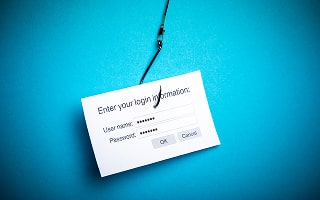
Phishing and Social Engineering
Bulk phishing and spear phishing are the methods most used to initiate an attack. Attackers typically target login credentials, but can also trick users into disclosing other sensitive data, such as financial details. Attackers are increasingly using generative AI to compose phishing messages and gather intelligence on targets, making spear-phishing attacks more believable. Attackers like Scattered Spider employ phishing and social engineering tactics to manipulate employees into disclosing login credentials and other sensitive data, which is then exploited to facilitate ransomware attacks.
Ransomware
A staggering 69% of organizations are infected with ransomware, according to a Proofpoint report. Attackers don't just encrypt files and documents; they now exfiltrate the data before encrypting it. Unfortunately, only 65% of the data is recovered.
Accidental Leaks
Employees can accidentally leak data without realizing it if they are not trained on secure practices. A recent example was the leaking of Mercedes-Benz source code when an employee accidentally exposed API credentials via an unsecured GitHub token.
Malicious Insiders
Some employees are malicious in their attempt to steal company and customer data. Researchers found an insider threat digital recruitment marketplace on messaging apps and dark web forums. Recruiters offered lucrative contracts to steal data on order.
Insecure Cloud Storage
Data is increasingly stored in cloud repositories, as evidenced by a Thales report on cloud security. The report also highlights that 54% of data in the cloud is sensitive. Sensitive data is a draw for cybercriminals, as it has intrinsic value for use in follow-on attacks and fraud. Cybercriminals exploit vulnerabilities like weak encryption, insecure data storage, and poorly implemented privilege management and authentication. AWS S3 bucket leaks have had media coverage in recent years due to misconfiguration, which has led to data breaches.
Other Cyberattacks
Many other cyberattacks are focused on data theft. SQL Injection (SQLi) attacks, Man-in-the-Middle (MitM) attacks, and infostealer malware are all used to hack into data stores, intercept data during transfer, or use malware to exfiltrate sensitive data. A recent data breach, described as the largest in history, saw infostealer malware compromise 16 billion data records.
Benefits of Securing Data
Data security may seem like a hurdle in business, but by ensuring data is protected, an organization receives many benefits, including the following:
Adherence To Regulations
There are numerous data protection and privacy regulations worldwide that affect 75% of businesses. These regulations can be general, such as the EU's GDPR, or industry-focused, like the healthcare regulation HIPAA in the USA. Data protection regulations encompass a wide range of data security requirements, including access controls and encryption. By adhering to data security best practices, a company avoids the penalties of non-compliance, which include substantial fines. Data security mitigates the risk of non-compliance.
Protecting Customer Data
Companies that fail to protect customer data experience reputational damage and lose customers. Research has found that nearly half (47%) of companies struggle to attract new customers following a cyberattack. It is, therefore, critical for business success to protect customer data.
Protecting Company Secrets
Industrial espionage and insider threats cause companies to lose revenue. Researchers found that 15% of employees take sensitive IP (Intellectual Property) with them when they leave an organization. Stolen IP and other company secrets are at risk of being leaked to competitors. Leaked proprietary information can result in a company losing 50% of its market share. Data security best practices reduce the risk of insider threats.
Protecting Reputation
Lost data can be a sign that a company does not prioritize cybersecurity. This signals to company partners and customers that a company does not respect their data. This can result in reputation damage and share price declines. Demonstrating a robust approach to data security is part of building a sustainable company.
Data Security Best Practices
Data security is a mix of people, processes, and technology, delivered through best practices. Some of the components of these best practices are as follows:
Data Security Policies, Visibility, and Classification
Data can often exist across a mix of on-premise and hybrid cloud environments. Remote workers and shadow IT add complexity to data creation, storage, and sharing. The result is that data can become difficult to locate. Without visibility, data cannot be identified and classified. Classification is another area that requires comprehensive visibility. Data security policies must include mechanisms to make all data visible and to set classification levels to determine the appropriate level of security.
Encryption
Data encryption is a fundamental security measure that must be used to secure data during storage and sharing.
Identity Management (IDM)
Identity management is an umbrella term covering areas such as privileged access management (PAM), authentication and authorization, and verification. A zero-trust network access (ZTNA) utilizes all of these identity management ecosystem components to implement robust data security. Companies like Ping offer a ZTNA solution.
Data Masking
Software tools are available to help mask data in appropriate use cases. For example, masked data is often used in the Software Development Life Cycle (SDLC) for testing. Another use case is in analytics and research. There are various data masking tools available, and the choice ultimately depends on the specific data masking use case.
DLP Tools and Processes
Data can be leaked accidentally or maliciously. Data Leak Prevention tools can help prevent data leaks from happening. For example, email DLP solutions like TitanHQ use keywords and phrases as signals that a message contains sensitive information. The email may be prevented from leaving the corporate network until it is checked and released. Email DLP solutions may also encrypt messages, making them accessible only to the authenticated recipient.
Security Awareness Training
Educating employees about data security and related security risk areas is a fundamental measure in preventing human-centered cyberattacks. Researchers have shown that 71% of users take risky actions when presented with phishing emails. Reducing this risky behavior can help prevent a cyberattack from escalating into a data breach or ransomware attack.
Dark Web Monitoring
Stolen data typically ends up on the dark web for sale, where it is purchased and used for follow-on attacks, such as phishing customers. Dark web data also provides the intelligence needed to target a company. Sentinex's dark web monitoring service scans the dark web and alerts your company if any customer or company data is discovered on dark web forums and marketplaces.
Conclusion
Data is a valuable commodity, and cybercriminals understand its intrinsic value. To protect your company's reputation, adhere to regulatory compliance, and prevent escalating costs associated with downtime and ransomware, a robust data security strategy is essential. By following data security best practices, your company can prevent sensitive data from being exposed or stolen.
FAQs
Is data security the same as data privacy?
Data security involves implementing measures, tools, processes, and maintaining vigilance to ensure data confidentiality and integrity. Data security measures prevent data from being exploited, leaked, exposed, or modified.
Data privacy is about how data is used and controlled. For example, obtaining consent to share data is an important aspect of data privacy, as is minimizing the collection and sharing of personal data.
However, there is overlap between data security and privacy, as you need security measures to prevent data from being exposed and to protect a person's privacy from being compromised.
Has AI changed data security practices?
AI is a double-edged sword in terms of data security. On the one hand, AI-powered cybersecurity measures help stop emerging threats; on the other hand, AI-assisted cyberattacks are making data security more challenging. Generative AI is being used to create evasive malware and believable phishing campaigns. Security vendors are utilizing AI, such as machine learning, to counteract AI-driven attacks.
Why is it important to protect company and customer data?
There are many reasons to develop a robust data security posture. Ensuring that customer and company data is protected prevents cybercriminals from exploiting the data. Data security measures are also required by data protection and privacy regulations - adherence to these measures avoids large fines. Data security also protects a company from financial exploitation and fraud.